When was the last time you asked a homeless person what they used to do, or how they got to be where they are today? Working at the UCLA Mobile Clinic, I have the privilege of learning my patients' stories on a weekly basis. I've learned that there is no limit to the amazing things some of them have done (or are currently doing!). Homelessness does tend to be a downward spiraling process: one thing going wrong and leading to the next thing falling apart. It's hard to lift oneself out of once that, any many of our clients have been through some seriously devastating situations in their lives.
This brief video journal asked homeless people to write down one fact about themselves on cardboard. I thought this was a really cool idea--it revealed things that rarely come up in our Social Histories, but can often times be so integral to who a person is and what makes them tick:
http://www.trueactivist.com/homeless-people-were-asked-to-write-down-a-fact-about-themselves-their-answers-may-surprise-you/
Credit to Ebony for posting this originally!
Wednesday, September 3, 2014

What Doctors Can't Do (Community Health Workers Can)
In the Opinion Pages of the New York Times, the 'Fixes' column explores solutions to major social problems. Each week, it examines creative initiatives in an effort to promote Solutions Journalism.
On August 28, the column explores the potential of community health workers to, "help patients with the many factors keeping them sick that aren't typical doctor problems... Doctors can’t help patients change their behavior in the 15 minutes they spend with each patient. But community health workers can."
Read the article here here.
On August 28, the column explores the potential of community health workers to, "help patients with the many factors keeping them sick that aren't typical doctor problems... Doctors can’t help patients change their behavior in the 15 minutes they spend with each patient. But community health workers can."
Read the article here here.
Friday, August 8, 2014
Five Facts Everyone Should Know About Poverty
We see poverty every day on the street, we work with poverty every day as we care for patients in our clinics. But how often do we really stop and think about what it means to live in poverty?
The California Budget Project (an independent, non-profit agency which aims to improve budgetary concerns of low- and middle-class Californians) recently published a great article shedding light on a few key points about poverty that we should all keep in mind.
Things that struck me the most:
*Without Social Security, 45% of California's seniors would be living in poverty
*The Federal Child Tax Credit and Earned Income Tax Credit kept 1.3 million Californians (and 629,000 children) out of poverty between 2010 and 2012
*Poverty is largely a condition of the employed: too few high-paying jobs, and wages generally too low to support the high cost of living in this state. Even with the raised minimum wage of $9, a full-time minimum wage worker makes only $18,720, which is below the poverty line for a family of three. The pending raise to $10 is unlikely to raise many people out of poverty.
*More than half of US adults aged 18 to 60 spend at least one year living below 150% of the poverty line.
*Unstable and part-time job expansions with poor benefits mean that more people cycle in and out of poverty than in the past.
*State assistance programs are being cut on a yearly basis: CalWORKs, In-Home Supportive Services, subsidized childcare/preschool have all been the victims of steep budgetary reductions.
*More than one in five Californian children lived in poverty in 2012, and one in 10 lived in deep poverty. Moreover, children who are born into poverty are five times more likely to remain there for half of their young adulthood, than are children who are not in poverty. This likely relates to a decreased ability to secure good schools, safe housing without overcrowding, and adequate healthy foods. The stress of growing up and living in poverty may have neurodevelopmental effects as well.
*Studies show that public assistance and tax credit programs can help children achieve gainful employment as young adults and avoid needing to take advantage of such programs themselves.
http://cbp.org/FiveFactsAboutPoverty.htm
The California Budget Project (an independent, non-profit agency which aims to improve budgetary concerns of low- and middle-class Californians) recently published a great article shedding light on a few key points about poverty that we should all keep in mind.
Things that struck me the most:
*Without Social Security, 45% of California's seniors would be living in poverty
*The Federal Child Tax Credit and Earned Income Tax Credit kept 1.3 million Californians (and 629,000 children) out of poverty between 2010 and 2012
*Poverty is largely a condition of the employed: too few high-paying jobs, and wages generally too low to support the high cost of living in this state. Even with the raised minimum wage of $9, a full-time minimum wage worker makes only $18,720, which is below the poverty line for a family of three. The pending raise to $10 is unlikely to raise many people out of poverty.
*More than half of US adults aged 18 to 60 spend at least one year living below 150% of the poverty line.
*Unstable and part-time job expansions with poor benefits mean that more people cycle in and out of poverty than in the past.
*State assistance programs are being cut on a yearly basis: CalWORKs, In-Home Supportive Services, subsidized childcare/preschool have all been the victims of steep budgetary reductions.
*More than one in five Californian children lived in poverty in 2012, and one in 10 lived in deep poverty. Moreover, children who are born into poverty are five times more likely to remain there for half of their young adulthood, than are children who are not in poverty. This likely relates to a decreased ability to secure good schools, safe housing without overcrowding, and adequate healthy foods. The stress of growing up and living in poverty may have neurodevelopmental effects as well.
*Studies show that public assistance and tax credit programs can help children achieve gainful employment as young adults and avoid needing to take advantage of such programs themselves.
http://cbp.org/FiveFactsAboutPoverty.htm
Friday, July 18, 2014
Building Health: How I learned How to Make a Difference
Show me someone who eagerly goes through 23+ years of school, and still eagerly seeks more - and I'll show you someone whose hobby is thinking.
I've always been the type of person who likes to think about things. Not just academic things; food, movies, books, art are all fair game. Sampling a carrot-ginger bisque at a farmers' market, my mind will try to pick apart the ingredients; coming across a snazzy web page, I'll ponder its construction; reading a thought-provoking essay in the New Yorker, I'll wonder how many caffeine-fueled hours of coffee-shop-loitering it took to produce that article. (For the record, people who tell you they love to write are usually lying: writing itself is like slow torture, but the finished product is usually well worth it).
I've heard that thinking too much is the root of all misery, the flip side of the "ignorance is bliss" argument. (Or, perhaps, that is something I thought up while in a state of thought-induced angst.) Indeed, thinking has gotten me into trouble a few times (see: accidentally walking into glass doors, wandering into oncoming traffic at red light, struggling for eons over exactly which falafel joint to visit for lunch.) If the mind were a muscle, mine often feels like a marathon runner's toes: weathered, achy and bruised, under-appreciated and overused.
Maybe thinking isn't for the faint of heart. And yet, as the eternal optimist that I am, I see it as a the first step to positive change, to solving problems. It's hard to get to the stage of doing unless you know 1) what you want to do and 2) why it makes sense to do it. And thus, enter the stage of thinking.
In health, history supports this notion. A deadly cholera epidemic in London in the 1800s was unraveled by a physician who thought about the underlying pattern of cases - instead of simply treating every case as it appeared - and localized the source to a faulty water pump. A life-saving antibiotic, penicillin, was accidentally discovered by a scientist who thought about the strange mold that had grown on his bacteria cultures - instead of passively discarding it a spoiled experiment - and found that the mold actually killed bacteria.

Thinking is the championed cause of public health and preventive medicine. In a test tube, a bacteria triggers infection; a mutation of a cell incites cancer; an inherited faulty gene produces a characteristic disease. But in society, illness doesn't follow pure test-tube predictability. Public health physicians tease apart the puzzle of disease, outlining patterns of individual illness with tools of epidemiology. Recalling the words of esteemed epidemiologist Dr. Roy Acheson:: "Why did this person get this disease at this time?"
After seeing patients in the hospital, I'd spend many hours thinking about this question - about patients' differential experience of illness. I was inspired by the pockets of intelligence, quality and compassion present in the US medical system - the caring colleagues who put needs of patients before their own, mentors who patiently taught residents, episodes of high-quality care successfully healing patients with devastating disease. And yet, I was troubled by the gaps in health: patients who couldn't afford drugs or lacked insurance; who died, suffered through emergency surgery or were committed to expensive, lifelong drug therapy for preventable and easily fixable conditions.
I thought: why were some patients able to quit smoking, but not others? Why did some patients seem to end up on five different blood pressure medications, while others needed none? Why did certain patients return time and again to the emergency room with the same, chronic symptoms, while others were permanently cured?
Why, fundamentally, did some people seem to have better chances of better health?
Thinking led me to others thinking about the same questions, and I began finding clues: the role of environment and the community on health. Social influences - peer community, education, the "built environment" affects health by molding behavior, self-esteem, self-efficacy, and prioritization of health.
Take this 2006 study in the Public Library of Science, where researchers' analysis of health data revealed a United States of "Eight Americas" - eight broad geographic regions with strikingly different levels of health. They reported the following findings:
- The ten million Americans living in the healthiest region - "America 1" - enjoyed one of highest average life expectancies in the world, even higher than long-lived residents of Japan.
- Meanwhile, the residents in the "lower America" regions had average life expectancies "more typical of middle income or low-income countries". The lifespan difference separating groups at both extremes stretched to nearly thirty-five years.
- Most differences in the death rates were from differences in rates of violence, injury and chronic disease - in other words, conditions which could be treated or prevented.
- The gaps in health outcomes between groups - and the relative order of the groups - had not changed significantly since 1987.
- Insurance coverage ("access to care") and use of health care services (ie number of visits to a clinic or emergency room) did not fully explain the differences in health outcomes. That is, the difference in death rates separating groups was much greater than the difference in rates of health insurance coverage.
This national pattern of wide variation in health translates to the county and state level. "Shortened Lives", a groundbreaking 4-part series in the Contra Costa Times, reported on how decades of variation in life expectancy - and marked differences in rates of homicide, asthma, heart disease and cancer - separated Bay Area counties that were just digits apart in zip code:
- Life expectancies ranged from 87.1 years in the Walnut Creek suburb to 71 years in crime-heavy Sobrante Park outside of Oakland.
- Residents of "hardscrabble" East Bay neighborhoods had rates of heart disease and cancer almost tripling those in wealthier residents.
- Hospitalization rates for children with asthma soared in the lowest-income neighborhoods outside of Oakland, with nearly a fourth of children returning to the hospital within less than a year of being discharged.
- The variation was not a discrete "rich-are-healthy", "poor-are-unhealthy" pattern - it instead showed a gradient along the socioeconomic ladder. That is, middle class communities were healthier than poorer communities, but less healthy than the most affluent communities.
Further evidence highlights the reality that ethnic group and minority status arises as a predictor of health:
- A study comparing the health of African American and Caucasian residents in 256 U.S. metropolitan areas. found that African Americans had 81% higher premature death rates on average.
- A nationwide survey conducted by the CDC analyzed rates of disability and asked people to "rate" their own health. The survey found a distinct pattern by race: almost one-and-a-half-times the number of African-Americans and triple the number of Hispanic adults reported their health as "fair" or "poor" compared to white adults.
- In that same study, almost three times as many Native Americans experienced disabilities or mental health problems compared to Asian-Americans.
Why is the ethnic link to health is a fundamentally unnatural and illogical phenomenon?
Researchers who have dedicated their lives to the subject conclude that there exists no basic biological or genetic explanation for why health should differ so markedly based on skin color. Genes certainly play a role in some diseases. There are lists of genetic diseases known to concentrate in particular ethnic groups (lists which medical students nationwide are currently cramming to pass medical school): Tay Sachs disease in Ashkenazi Jews; sickle-cell anemia in African-Americans; hypokalemic periodic paralysis in Asian-Americans. And, there is even evidence that some ethnic groups respond uniquely to commonly prescribed medications.
But the vast ethnic health differences in death and disease don't arise from rarer genetic conditions like Tay Sachs disease or sickle cell anemia. They come from controllable things like smoking, homicide, heart disease.
Moreover, a fact of science is that simply having a gene does not guarantee its expression. (Twins with exactly the same genes, for example, have different health outcomes when placed in different environments. The study of how genes are expressed - epigenetics - is a whole, mysterious and fascinating field in itself.)
Repeatedly, studies confirm that biology and genes alone do not explain the variation in health by race, community or gender. In short, differences in people of the same ethnicity far exceeds the genetic variation between groups (one expert categorically notes, "race does not account for human genetic variation, which is continuous, complexly structured, constantly changing, and predominantly within races.") Some geneticists argue that skin color is a flimsy facade of difference - that there is, in fact, little real biologic basis for "race."
So it's not genes or biology, but social structures and community environments - the social determinants of health - that explain the patterns of health detailed above: the "Eight Americas", the ethnicity-health link, the zip-code predictor of lifespan.
I became motivated to make a difference in health by tackling these root causes, and that motivation led me to the Kaiser Permanente Community Medicine Fellowship. It's an amazing experience; every day, I tackle systems-based issues that undermine community health, while also delivering direct clinical care to patients in need.
But most rewarding is the group I work with: a talented, inspired and passionate group of fellows who work tirelessly to boost the health of the community they serve. Together, we work to improve the health context of our patients, transforming their vision for health and sustaining the work we do in the clinic setting.
In the entries to come, Community Medicine Fellows will share their knowledge and experiences: pictures, reflections, questions, dilemmas, and practical insights. This is a forum for interaction, discussion and learning - helping us to stay connected but also to teach each other and grow in the process of becoming compassionate physicians.
It's going to be a great year. Here's to making a difference.
Tuesday, July 15, 2014
My Journey: Questing After the Perfect Smoothie

How do you improve health?
About nine years ago, I quit my job in investment banking and went back to school to study physics and organic chemistry. In the morning, I studied batteries, circuits and resistors; in the afternoon, I spent three hours wizarding with strange liquids in beaker-shaped flasks, heating, mixing, measuring and freezing various chemical concoctions.
Understanding why my microwave invariably conked when I turned on my hairdryer, battling "goggle-face", and navigating the terrorizing uses of the word 'titrate' were the apparent stepping stones to a dream: improving health.
This dream - this idea of improving health - nestled within a cozy little niche in my stubbornly idealistic personality. Coming from the world of ergonomic mesh swivel chairs, Office Depot bulk orders and Ann Taylor structured jackets, "improving health" shone as pure, gleaming Achievement. It was a vibrant Vitamix-quality smoothie of do-gooding and impact; so virtuous, it boasted probiotics and blue-green algae. Investment banking, on the other hand, was an overmixed fruitcake. Deceptively pretty to look at - if a bit gaudy with those fluorescent cherries - but a sure source of heartburn, and a mind-numbingly monotonous chew.

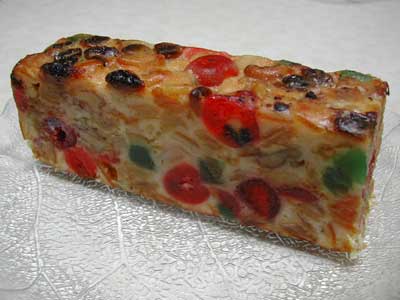
One morning around 3 am, in the middle of figuring out whether the $50,000 worth of renovated cubicle walls listed on an IT firm's balance sheet was truly a "one-time" expense, I stopped. I lay down the stack of courier-fonted reports on the mahogany desk next to the other 30 piles of courier-fonted reports stacked in Office Depot desk trays, gazing out the 40th floor window onto the not-so-twinkling Dallas skyline. I asked myself: If I am fundamentally a smoothie person, why am I putting myself through the indigestion and certain tooth decay of a pretty lousy fruitcake?
It was a pivotal moment: I pushed the fruitcake away and decided to create smoothies. A few details later - including some pre-requisite science courses and a pesky test called the MCAT - I entered medical school in search of that dream, ultimately improving health.
In medical school, the portraits of white-haired, famous healer-alumni-leaders lining our lecture halls seemed almost sympathetic as we struggled to memorize more than we thought normal brains could hold. There were the complex biochemical pathways dictating human function, the alphabet soup of genes and molecules swimming in our cells, the maze of nerves and muscles that we carefully untangled in anatomy lab. We were learning raw ingredients of health, and I marveled at how they adjusted themselves automatically, without our conscious effort. This balance of ingredients enabled our healthy existence.
Four years later, I walked across the stage of a big auditorium, wearing a fancy robe with gigantic puffy sleeves, receiving a fancy diploma written entirely in Latin (personally double-checked, courtesy of Google Translate, to verify that its message indicated I had indeed graduated). At this point, I had the basic skills needed to blend without disaster - there would be no turning on machines with uncovered lids, and no combining potentially toxic combinations of, say, radishes and bananas.
But as far as fine-tuning the process - i.e., appreciating the subtleties of crushed vs cubed ice, the secret to cleverly concealing spinach in a sweet smoothie, or the trick to creating luscious mocha granitas? This practical toolkit would be acquired in a "blending apprenticeship": residency.
The apprenticeship unfolded for me as an internal medicine residency at a busy San Francisco hospital. Here, we treated patients with "bread and butter" conditions: they were the foundation of medicine, the common ailments that affect > 70% of all hospitalized patients. These were like the ubiquitous crushed ice in the classic slushie - heart disease and heart failure, infections, liver failure and stomach bleeds.
Then we had "zebras": patients presenting with one of the one-in-a-million genetic syndromes - rare syndromes, cancers, metabolic diseases and tumors. Those experiences were the exotic ingredients - i.e., the goji berries, Spanish saffron or whole Madagascar vanilla pods of medicine. When confronting a "zebra" condition, we proceeded with caution, researched everything we could, and if we figured something out, presented the recipe to each other at morning conferences and tumor boards.
Then we had "zebras": patients presenting with one of the one-in-a-million genetic syndromes - rare syndromes, cancers, metabolic diseases and tumors. Those experiences were the exotic ingredients - i.e., the goji berries, Spanish saffron or whole Madagascar vanilla pods of medicine. When confronting a "zebra" condition, we proceeded with caution, researched everything we could, and if we figured something out, presented the recipe to each other at morning conferences and tumor boards.
But after nearly a decade spent seeking the secrets to bettering health, something happened. It was a nagging feeling of something not quite right, something that - at first - I couldn't quite identify. I chalked it up to exhaustion; after all, working stretches of nights and spending thirty hours in a hospital every third day wearing three beepers can trigger strange "feelings" in anyone. But as I started taking care of more patients and handling greater responsibilities as a physician, the troubling sensation grew in intensity, demanding attention.
I pondered, trying to conceptualize it, this sense of unease.
Was it related to the sky-high blood pressure and blood sugar readings in the patients already on fifteen different medications, who came back to clinic each time with even higher readings?
Was it related to the textbooks which, when referred to for help, directed me mechanically down a set of algorithms and pathways all of which seemed to end with the step of "add medication Z to patient's regimen"?
Was it related to the thing that brought back the hospital's "frequent flyers" - the patient who checked himself at least once a month requesting room 6408B - with the telltale symptoms of heart failure?
Was it related to the reality that more than 80% of patients ended up leaving the hospital without a truly unifying explanation for their symptoms?
Or was it something about our training, which emphasized managing day to day laboratory findings and physical symptoms until patients were "objectively stable" enough to go home, rather than finding and treating an underlying cause?
Was it related to our "rounds", where every morning at 8:30 am, we spent four hours seated around a decidedly investment-bank-ish table, "running the list" of all the patients in the hospital under our care with the head physician - and then spending < 1% of this time as a team actually seeing, talking to and examining these same patients?
Was it manifested by the growing number of morbidly obese patients - some of whom could not fit into standard CT and MRI machines, and needed ambulance transport 60 miles away to an "open" scanner?
Was it something underlying the seeming epidemic of pain? Not the clear pain of a broken bone or sprained shoulder, but the debilitating, diffuse, persistent pains patients suffered in their lower backs, hips, knees, stomach?
Or, perhaps, was it related to our solution for such pain, centering mostly on some progressively stronger mix of anti-inflammatory drugs and opiates- a stopgap regimen which could not cure, but simply toed the line between intolerable pain and intolerable side effects?
The source of my unease, I found, lay in a fundamental paradox: Although I had come to medicine to heal, I found myself maintaining - and even contributing to - an unhealthy status quo.
In the process, I found I was beginning to lose my own health. I was sleep-deprived, jumpy and constantly exhausted. Yet, after sleepless nights on call and emotionally draining weeks spent caring for dying patients in the intensive care unit, jangled nerves left me lying awake in bed, staring at the ceiling for hours. Books and medical journals piled up on my desk, reminders of my responsibility as a physician to "keep up with the literature". Where the constant learning in medicine had once beckoned to my inquisitive mind, now the growing stacks loomed as daunting symbols of a Sisyphean endeavor. I'd entered residency confident, happy and idealistic; now, I felt more jaded, timid and self-critical. I started to question whether my dream of improving health was just that - a naive student's pipe dream.
My training had essentially occurred in a smoothie-worthy healthcare system featuring an impressive array of state-of-the-art blenders with the most powerful motors; yet, I had discovered these tools were only as good as their inputs. More often, they mechanically minced sub-par and limp ingredients of health. The result: an off-tasting, poor quality and unsustainable concoction providing only inconsistent nourishment.
I was determined to put in the research and work needed to find a better recipe. And so I entered the comfort zone tailored to people who want to think, learn and figure out theories in a guided setting: university.
At the School of Public Health at UC Berkeley, I learned - in the presence of researchers, mentors and fellow classmates motivated by similar calling - how to find the root cause of the problems in medicine. And it's here that I began to figure out how I can work to fix them.
At the School of Public Health at UC Berkeley, I learned - in the presence of researchers, mentors and fellow classmates motivated by similar calling - how to find the root cause of the problems in medicine. And it's here that I began to figure out how I can work to fix them.
Luckily, the recipe isn't exclusive or copyrighted - and a winning recipe for health has to be nearly as popular as that viral Neiman Marcus' Secret Recipe Chocolate Chip Cookies recipe (Were those really that good?). Shouldn't everyone who wants to be healthy know how health functions and what drives illness? Isn't that knowledge itself a fundamental bridge to sustaining health?
I think so. And thus, the purpose of this blog.
This post describes one person's story, but I am part of a bigger one. Currently, I work as an Internal Medicine Community Medicine fellow in Los Angeles. There are six of us fellows in the program: all of us passionate, dedicated and fervent about the idea of improving health. Our mission is to build health - the perfect "health smoothie" - from the ground up: the community.
As you'll see in subsequent posts, us fellows know intimately that health starts in the community; outside the hospital. This, despite the fact that 90% of our training has essentially, thus far, been confined to the all-too-familiar confines of our residency programs' hospitals. But now, funded by the generous nonprofit arm of a major tertiary care hospital, we are spending a year navigating the world of health, figuring out how to build it and sustain it. This year, we'll find clues inspiring new "smoothie" ingredients, test-drive and formulate recipes, and think about this subject in earnest.
We want to share what we learn and find - with you, the reader. Think of it as a community potluck inspiring you to taste something new.
Last week, six hyper-educated doctors went back to school, and their classroom is the vast expanse of the community. And that is where our story begins.
Subscribe to:
Posts (Atom)